What is The Difference Between Wind-Resistant Roller Shutters and Standard Roller Shutters?
Blog 2026-07-04
In areas prone to typhoons, such as coastal cities, choosing the right type of door for factories, warehouses and shipyards is never a trivial matter. When faced with a typhoon, standard roller shutters may, at best, become warped; at worst, the entire door can be blown off its hinges, resulting in significant damage.
So, what exactly is the key difference between wind-resistant roller shutters and standard roller shutters?
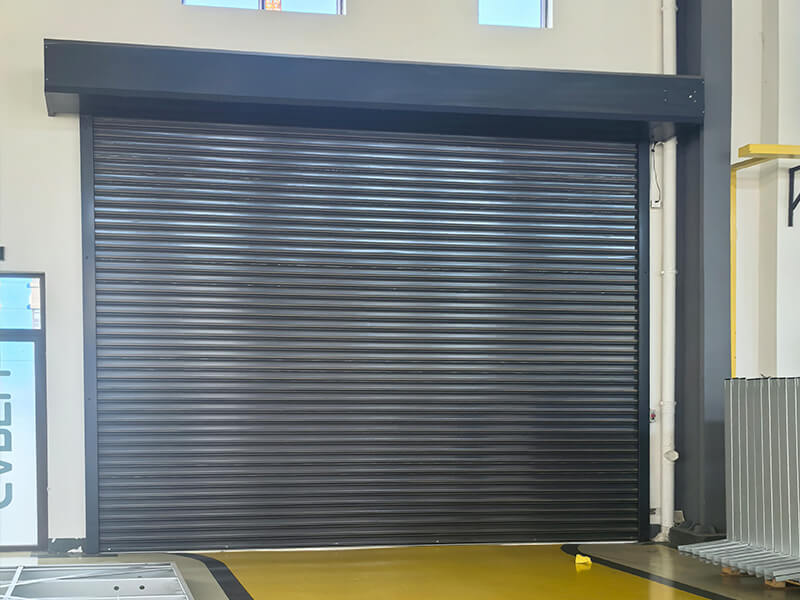
As a leading manufacturer of wind-resistant roller shutters, Sadouqi’s 9-metre-wide by 10-metre-high large-scale steel wind-resistant roller shutter, installed at a certain China Shipbuilding equipment base in Sanya, is widely regarded as the ‘gold standard for wind resistance in large openings’. Why is it capable of withstanding a Category 14 typhoon?
1. The frame of the wind-resistant roller shutter is sufficiently rigid: wind-resistant columns + slats = a ‘mobile load-bearing wall’
Wind-resistant columns: 100×200mm dimensions with a thickness of 18mm, far exceeding the industry standard of 6mm. Made from Q345 high-strength steel, each column can firmly withstand strong lateral wind impacts, preventing the entire door from toppling over;
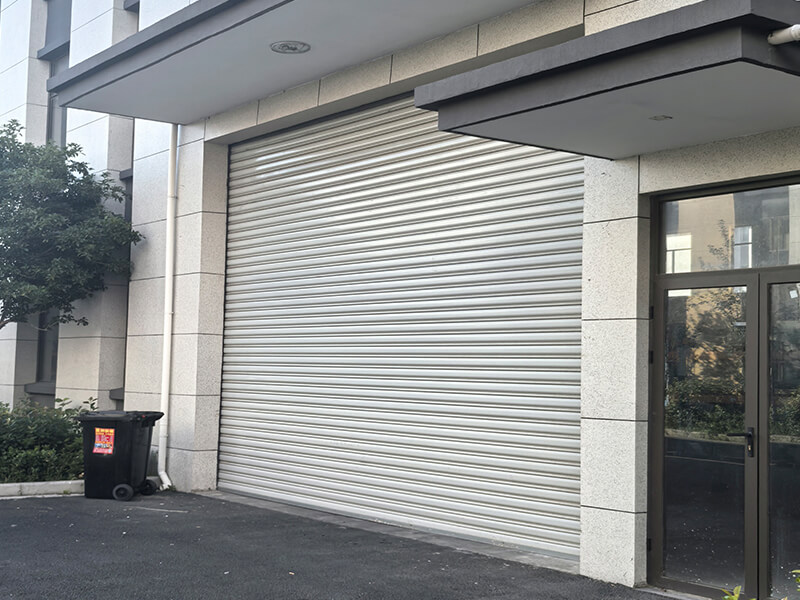
Slats Design: 1.5mm thickened steel slats combined with a 3cm high arched structure, achieving a weight of 25kg per square metre — note that standard wind-resistant slats are only 1.0–1.2mm thick and weigh just 15kg per square metre. The high-arch design effectively disperses wind pressure, ensuring more even load distribution and eliminating localised dents and deformation at the source;
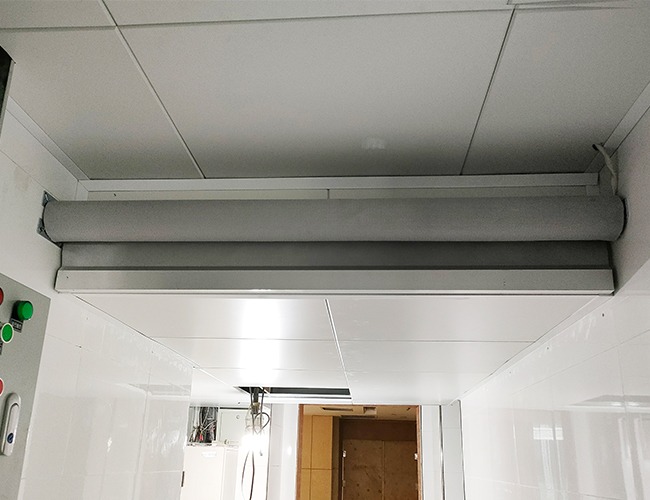
Enclosure dimensions: 1.2 m × 1 m extra-wide enclosure, with ample internal space reserved for reinforcement structures, offering a 50% increase in torsional strength compared to standard enclosures (0.8 m × 0.8 m).
2. Wind-resistant roller shutters with powerful drive: Drive shaft + motor = the ‘heart of wind resistance’
Drive shaft: 8–10-inch reinforced design, with a diameter 1.5 times that of standard roller shutters; rotates without any wobble, preventing jamming in strong winds;
Motor Specifications: Equipped with a custom-made high-power motor by Wangwei, delivering 30% higher torque than standard motors. It ensures smooth operation even when the door panel is subjected to wind pressure during typhoons, and features built-in overload protection to prevent motor burnout.
3. Specialised Design: Wind Load Calculation Report = “Wind Resistance Guarantee”
For every wind-resistant roller shutter, the project designer must accurately calculate the wind load and, taking into account the wind pressure values at the installation site, issue a bespoke wind load calculation report to ensure that the product is never released from the factory unless it meets the required wind resistance rating. This is something many small manufacturers are unable to achieve: they merely make verbal claims about “wind resistance” but cannot provide any actual test data to back them up.
What is the difference between wind-resistant roller shutters and standard roller shutters? Do you know the answer?