A Detailed Guide to Selecting Flexible Doors for Coastal Industrial Buildings
Blog 2026-07-20
Key Challenges in Selecting Door Systems for Coastal Shipyards
Large coastal shipyards and heavy equipment manufacturing sites in China commonly feature extra-wide door openings, and purchasers have long been uncertain as to whether suitable flexible doors can be selected for such openings. The indiscriminate use of traditional rigid gates leads to problems such as excessive dead weight in large-span structures, susceptibility to twisting and deformation due to prolonged exposure to strong winds, and disproportionately high construction costs. Furthermore, the selection of unsuitable gates can hinder the normal entry, exit and handling of large ship components and heavy equipment, thereby hampering production efficiency on site and creating long-term safety hazards for coastal projects.
Causes of the Pain Points
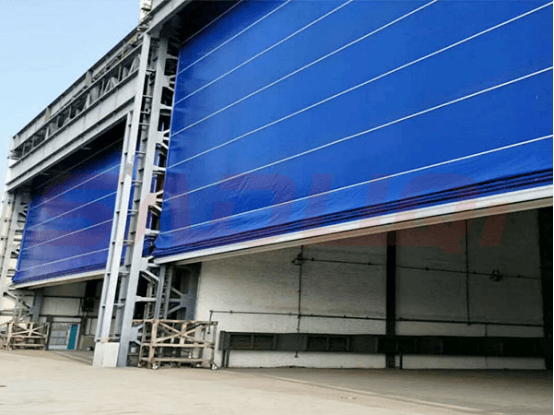
1. The door openings have unusual dimensions; in large shipyards, they are generally over 30 metres wide, with some even exceeding 40 metres. Rigid doors with large-span structures require a significant amount of material and have a high dead weight; when subjected to sea winds over the long term, they are highly susceptible to structural deformation.
2. The impact of the coastal climate: Typhoons are frequent along the southern coast. Ordinary flexible gates are inadequately designed to withstand strong winds, making them prone to damage or detachment during severe typhoons. The cost of making them hurricane-resistant is high, and they require frequent repairs and replacements.
3. Severe environmental corrosion: Coastal areas are subject to high levels of salt spray year-round. The anti-corrosion treatment applied to the steel structures of ordinary gates often fails to meet standards, leading to rust and decay within just three to five years, which significantly shortens the product’s service life.
4. Special operating conditions impose stringent requirements; sandblasting and explosion-proof workshops have mandatory compliance requirements regarding the sealing and explosion-proof performance of doors. Standard industrial doors fail to meet industry safety standards, making it difficult for projects to pass acceptance inspections.
5. Misconceptions regarding cost planning: a lack of understanding of the structural advantages of extra-wide-span flexible doors leads to the continued use of traditional rigid steel doors, thereby increasing both project construction costs and long-term operational and maintenance expenses.
Tailor-made Solutions for Extreme Coastal Conditions
To address the challenges of selecting suitable doors for extra-large coastal openings, Sadouqi Intelligent Technology offers on-site survey services. We carry out on-site measurements of the door opening’s length and width, calculate the site’s wind load and salt fog corrosion levels, and, taking into account the dimensions of the equipment to be moved through the site and local climatic conditions, customise extra-large-span, wind-resistant, flexible doors to the appropriate specifications. Leveraging our two localised production bases in Hai’an, Jiangsu, we undertake non-standard manufacturing, on-site installation and local after-sales maintenance and servicing, meeting project delivery requirements in various regions around the world.
Key Specifications of the Sadouqi Extra-Large-Span, Wind-Resistant Flexible Gate
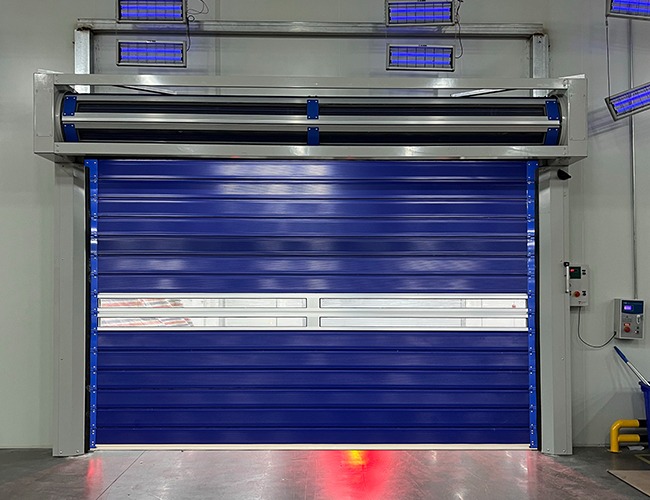
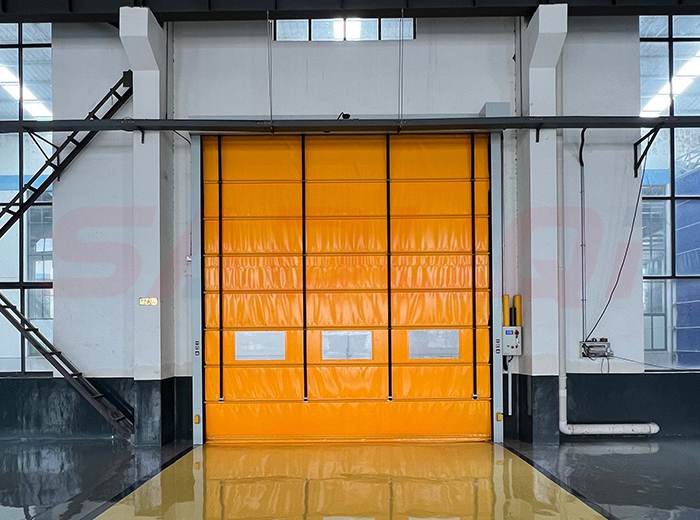
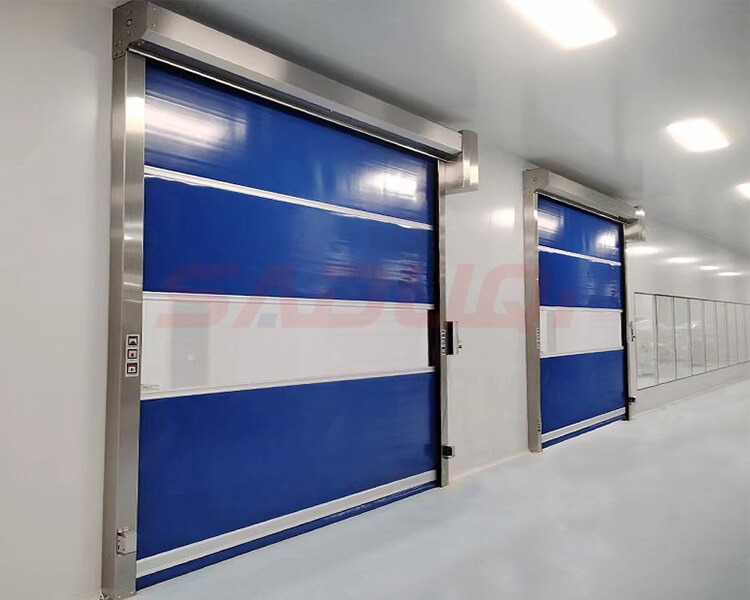
Curtain material: Special PVC composite coated fabric; customisable with specialised corrosion-resistant and blast-resistant materials; wear- and tear-resistant; resistant to acid, alkali and salt spray corrosion. Suitable for single-leaf openings with a maximum span of up to 44 metres and a maximum height of 39 metres, ideal for access through extra-large openings in shipyards and aircraft hangars.
Wind resistance: Standard configuration withstands wind forces of Force 8–12; suitable for extreme typhoon conditions in coastal areas. Corrosion protection process: The steel structure undergoes Sa2.5-grade rust removal followed by a multi-layer anti-corrosion coating process, ensuring a service life of over 10 years.
Operation configuration: Equipped with a variable-frequency industrial drive, supporting multiple opening methods including radar, geomagnetic sensors, remote control and interlocking systems. Operation is smooth and safe, featuring a proprietary triple anti-fall device and a six-level mechanical and electrical dual protection system. Safety and anti-collision protection: The sealing structure incorporates a bottom U-shaped sealing strip and full perimeter sealing, providing protection against wind and dust whilst preventing the ingress of rainwater and corrosive media; the door seal has a service life of ≥10 years.