How to Choose An Extra-Large, Wind-Resistant Door?
Blog 2026-07-11
Whether for open-air shipyards, extra-large workshops in sandblasting and paint shops, or heavy-duty access points at wind turbine manufacturing plants, installing a flexible door requires it to withstand winds of Force 12 or higher, accommodate extra-wide openings of 20 metres or more, and meet the efficiency requirements for the frequent movement of heavy equipment.
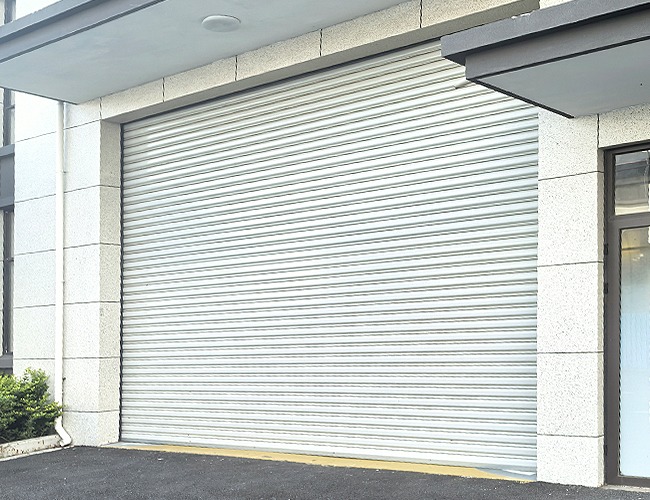
Traditional steel sliding doors and roll-up doors suffer from slow opening speeds, poor sealing performance, and weak wind resistance. They also offer no sound insulation, and their maintenance costs are staggering—annual repair costs account for more than 40% of the total equipment cost—and there are concerns regarding their safety.
Saduqi’s wind-resistant flexible doors are ‘tailor-made’ for large-span applications in heavy industry! With eight key advantages that directly address industry pain points, they have become the preferred choice for over 300 heavy industry enterprises looking to replace their flexible doors:
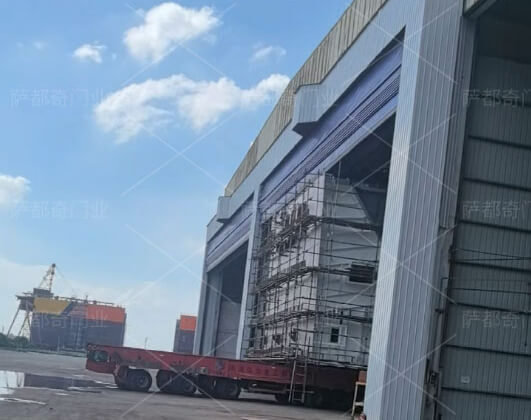
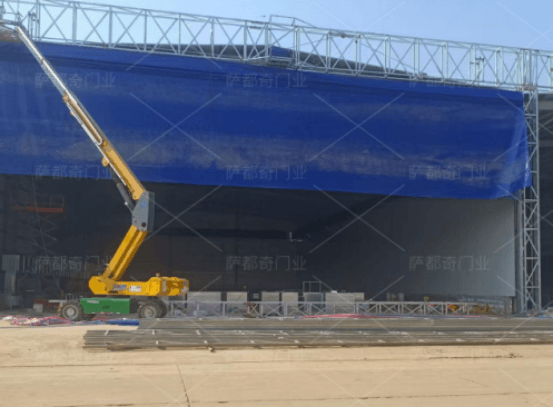
1. Customised flexible doors for large-span openings: Sadouqi Door Industry, a leading manufacturer of flexible doors, has successfully completed a large-scale installation project measuring 40 × 37 metres! We recommend prioritising this model for openings of 15 metres or more, as it completely resolves the challenges associated with installing extra-large doors in shipyard dry docks and maintenance access corridors at oil tank plants, without the need to cut into the building structure.
2. Ultra-high wind-resistant flexible doors: Sadouqi Doors (a leading manufacturer of flexible doors) provides an authoritative wind load calculation report, with a wind resistance rating of ≥ Grade 14, far exceeding the industry standard of Grade 3. These doors can operate reliably and fault-free all year round in open-air shipyards and coastal industrial premises.
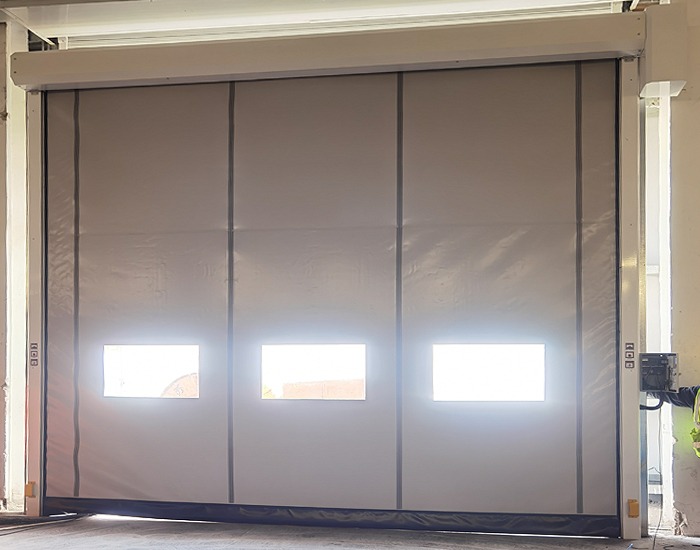
3. Sealed flexible doors: Sealing brushes around the perimeter of the door combined with high-density PVC curtains achieve a dust and water resistance rate of 98 per cent, preventing sandblasting dust from escaping and maintaining constant temperature and humidity in paint shops; with excellent thermal insulation properties, they can reduce annual energy loss in factory buildings by 25–30 per cent, whilst also blocking 80 per cent of external noise.
4. Doubled traffic efficiency: Opening speeds of 6–8 metres per minute—3–4 times faster than traditional sliding doors—ensure that frequent entry and exit by heavy goods vehicles and wind turbine blade transporters does not cause congestion, directly boosting production efficiency by 40 per cent.
5. Flexible gates offering comprehensive safety protection: Equipped with anti-fall and anti-loosening devices, the structural design eliminates operational risks, ensuring the safe passage of personnel, equipment and vehicles.
6. Outstanding cost advantages: In ultra-large passageway applications, costs are 20–30 per cent lower than those of traditional steel sliding gates, delivering high-quality functionality within a more economical budget and offering unbeatable value for money compared to similar products.
7. Strong customisation capabilities: Supports customisation for fire-resistant and explosion-proof functions, fully complying with safety regulations for specialised operations in heavy industry. Door performance is optimised for scenarios such as sandblasting and welding, ensuring greater adaptability.
8. End-to-end support from the manufacturer: Free on-site measurements and professional design solutions, providing a one-stop service from production through to installation and maintenance, thereby reducing procurement and operational risks.
Contractors: Does your project require a flexible door like this?
Do shipyard dry docks or wind turbine assembly workshops require extra-wide, wind-resistant flexible doors?
Do sandblasting and paint shops or oil tank manufacturing plants require large, airtight, dust-proof and soundproof flexible doors?