European Standard Inorganic Fabric Fire-Rated Roller Shutter Door
Blog 2026-10-13
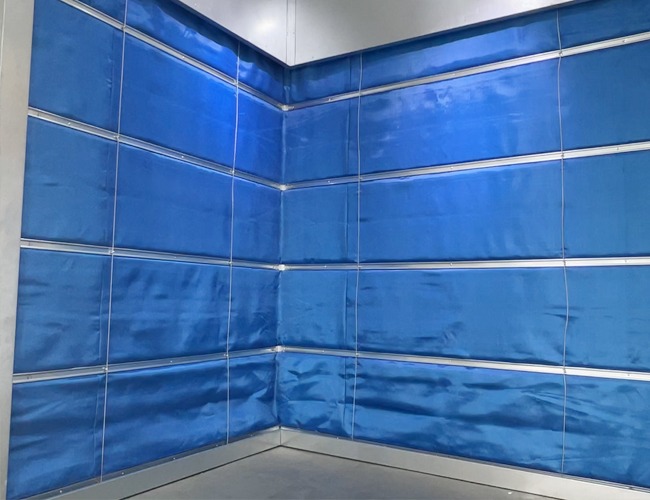
The European-standard inorganic fabric fire-rated roller shutter door features a dual-track, dual-curtain inorganic composite structure. The complete unit comprises the curtain assembly, guide rail system, drive shaft, drive motor, fire-linkage control system, base plate, compartment lintel and temperature-controlled release mechanism.
European Fire Resistance Classifications
EI120: Integrity 120 minutes + Insulation 120 minutes (2-hour fire-resistant roller shutter)
EI180: Integrity 180 minutes + Insulation 180 minutes (3 hours; the industry standard)
EI240: 4-hour premium thermal insulation fire protection (high-temperature workshops, warehouses, fire escape routes)
Suffix S: Additional smoke control performance (smoke leakage ≤ 0.12 m³/(m²·min)), i.e. EI180-S; mandatory requirement for shopping centres and underground car parks
Inorganic Curtain Face
Fire-resistant Decorative Fibreglass Fabric
High-silica fibreglass base fabric, temperature resistance ≥600°C, Euroclass A1 non-combustible rating, stain- and abrasion-resistant surface, available in grey or silver-grey industrial finishes.
High-temperature-resistant Thermal Insulation Core Layer
Spun aluminium silicate refractory fibre blanket, bulk density ≥130 kg/m³, long-term temperature resistance 1050°C; blocks heat conduction during a fire, limiting the temperature rise on the non-fire side to ≤140°C (EI thermal insulation standard under European standards). Shaanxi Provincial Emergency Management Department.
Radiation-shielding Aluminium Foil Fire-resistant Fabric
Reflects thermal radiation, reduces the temperature of thermal radiation on the non-fire side, and prevents the penetration of open flames.
Inner Fire-resistant Base Fabric
High-tensile-strength fibreglass fabric with embedded 304 stainless steel reinforcement cords arranged at 400 mm intervals in the weft direction, providing resistance to tensile tearing and preventing the curtain surface from cracking at high temperatures.
Curtain Panel Manufacturing Standards
Seam overlap ≥ 25 mm; double-stitched, high-temperature-resistant fire-retardant stitching; ≤ 3 seams per metre; no overlapping seams;
Fitted with galvanised steel reinforcement plates on both sides, spaced at 500 mm intervals, featuring integrated wind-resistant hooks, with wind pressure resistance up to 1,200 Pa;
The curtain as a whole is flexible and lightweight; for an opening of the same size, it weighs only one-third as much as a steel roller shutter, thereby reducing the load on building beams.
Guide Rail
Material: 2.0 mm hot-dip galvanised steel sheet, bent to shape; corrosion-resistant in accordance with EN 10346;
Dual independent guide channels, with inner and outer curtains operating separately; fire and smoke-resistant brush strips fitted within the channels;
Depth ≥ 120 mm, suitable for extra-wide openings of up to 10 m;
A smoke-sealing edge is fitted at the bottom, and installation gaps in the wall are sealed with fire-resistant sealant.
Rollers and Load-bearing Mechanism
Seamless steel pipe rollers, diameter 114/140 mm, fitted with reinforced cast iron end caps;
Load-bearing brackets on both sides with steel plate thickness ≥ 6 mm, fixed with expansion bolts at intervals of ≤ 800 mm;
Fitted with anti-derailment limit stops to ensure the roller shutter runs straight and without jamming throughout its entire travel.
Fire-resistant Roller Shutter Motor
Available in three-phase or single-phase versions, protection rating IP54, EU CE-certified motor;
Fitted with an electromagnetic brake and a manual release crank; can be lowered manually in the event of a power failure;
Lifting speed: 6–10 m/min; built-in overload and overheat protection;
Compatible with thermostatic release: the glass bulb ruptures at 73°C, causing the roller shutter to descend at a constant speed under its own weight until fully closed.
Fire-resistant Base Plate
A 3mm galvanised steel plate bent into a hollow structure, filled internally with non-combustible, fire-resistant ballast;
A continuous strip of silicone rubber fire and smoke seal along the bottom, which completely seals any gaps with the floor when lowered;
Sealed tightly against the guide rails on both sides, preventing smoke and flames from escaping from the bottom in the event of a fire.
Applicable Scenarios
Fire partitions in industrial premises and warehousing and logistics areas;
Large supermarkets, shopping centre atriums and areas around escalators;
Evacuation routes in underground car parks, underground railways and tunnels;
Fire compartments in hospitals, schools and office blocks;
Comparison of Advantages
Lightweight: 60 per cent lighter than steel fire-resistant roller shutters; no need to reinforce load-bearing beams when retrofitting older buildings;
Excellent thermal insulation: dual-curtain air layer + multi-layer inorganic wool; no need for a water curtain system, saving on water supply and drainage costs;
Low-smoke and non-toxic: Fire smoke toxicity rating t0, ensuring safer evacuation of occupants;
Minimal clearance required: Compact roll diameter, suitable for low-ceilinged workshops and spaces beneath suspended ceilings;
Noise reduction: Operating noise ≤55 dB, suitable for shopping centres and office areas;
Customisable dimensions: One-piece construction for extra-large openings up to 12 m wide and 8 m high.
Installation and Acceptance Specifications
The guide rails must be embedded in the wall or fully encased in a fire-resistant protective layer on the outer side, with any gaps in the wall filled with fire-resistant sealing material;
The bottom edge of the control box must be 1.3–1.5 m above the floor, with manual buttons provided on both the inner and outer sides;
There must be no obstructions beneath the roller shutter, and a clear space of ≥500 mm must be left on the floor;
Upon completion of installation, the following tests must be carried out: manual release test, fire alarm interlock test, and simulated temperature-controlled release test at 73°C;
The finished product must bear a CE mark, indicating the fire resistance rating, the notified body’s registration number and the date of manufacture.