How to Choose Between PVC High Speed Door and Rigid High Speed Door?
Blog 2026-10-07
PVC High Speed Door
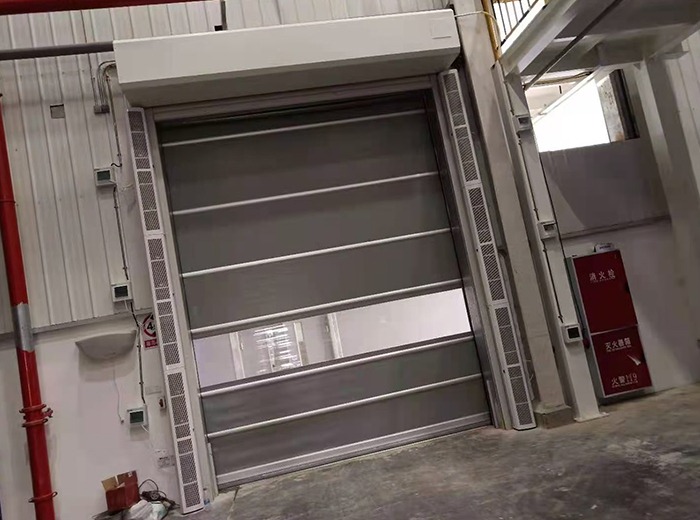
Door Body: High-density PVC-coated canvas, flexible soft curtain, standard thickness 0.8–1.2 mm, optional transparent window
Track: Narrow aluminum alloy track with an inflatable sealing airbag at the bottom
Wind Resistance: Standard model withstands winds up to Level 3; steel cable-reinforced model withstands winds up to Levels 4–5
Lifting Speed: 0.6–1.5 m/s; opens and closes extremely quickly
Weight: Lightweight door; low motor power requirement
Rigid High Speed Door
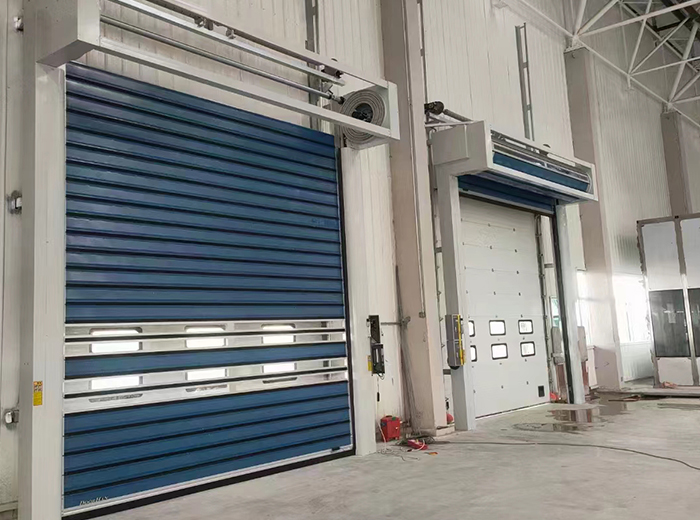
Door Panel: Double-layer extruded aluminum alloy door panels filled with a polyurethane foam insulation layer; individual panel thickness: 40–80 mm
Tracks: Available in vertical lift, up-and-over, and spiral tracks (the spiral model does not occupy overhead space)
Wind Resistance: Standard wind resistance rating of 6–10, specifically designed for outdoor factory settings and high-wind environments
Lifting Speed: 0.8–2.0 m/s; high-speed models can reach 2.5 m/s
Weight: The door panels are heavy, requiring motors and gearboxes with higher load-bearing capacity
Comparative Analysis
Thermal Insulation
PVC High Speed Doors: Virtually no thermal insulation; single-layer flexible curtain allows significant heat transfer; serves only as a dust barrier and partition, not for temperature control. The curtain tends to harden and crack in low-temperature environments.
Rigid High Speed Doors: Filled with polyurethane, they have a low thermal conductivity and provide excellent thermal insulation, cold retention, and heat insulation; suitable for cold storage facilities, temperature-controlled workshops, cold chain loading docks, and central air-conditioned plants.
Wind Resistance
PVC High Speed Doors: For indoor use only. If installed directly opposite outdoor air inlets, in open doorways within factory premises, or in coastal areas with strong winds, they are highly susceptible to warping and tearing.
Rigid High Speed Doors: Suitable for both indoor and outdoor use. Spiral-type rigid doors are the standard choice for outdoor main entrances at factory premises and are the preferred option for areas exposed to strong winds, rain, and snow, as well as for doorways along main access roads within factory grounds.
Sealed and Dustproof
PVC High Speed Doors: The air cushions at the bottom rest flush against the floor, and the side brushes provide a seal, offering decent dust protection; however, gaps in the soft curtain allow for significant heat exchange, resulting in high energy consumption in air-conditioned facilities.
Rigid High Speed Doors: The door panels are joined with rubber gaskets and feature multiple seals around the entire perimeter, providing excellent airtightness. This significantly reduces the escape of cool or warm air, leading to long-term savings on electricity bills.
Service Life
PVC High Speed Doors: When struck by a forklift, soft curtains will only dent or become scratched; if damaged, the entire section of curtain fabric must be replaced. With frequent forklift use, they tend to age and become damaged within 1–3 years. At low temperatures, PVC becomes brittle, shortening its service life.
Rigid High Speed Doors: Minor impacts are unlikely to cause damage; individual panels can be removed and replaced separately, eliminating the need to replace the entire door. Aluminum alloy is corrosion-resistant and shows no significant wear under normal use for 5–8 years.
Summary
Low-cost, purely indoor use, low ceilings, and dust-proof partitions only: Choose PVC high-speed doors
Outdoor doorways, temperature-controlled cold chain facilities, high forklift traffic, high wind and humidity, long-term durability, and dust-free cleanrooms: Choose rigid high-speed doors