What Is an Edge of Dock Leveler?
Blog 2026-10-09
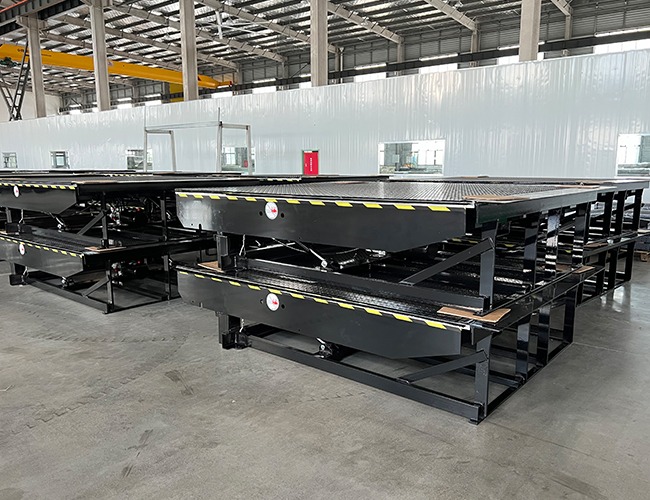
The Edge of Dock Leveler is mounted directly to the front face of the loading dock, requiring no excavation of a foundation pit or modifications to the existing dock structure. It serves as a low-cost loading and unloading solution for older warehouses and sites without designated foundation pits, bridging the height difference between the loading dock and the truck bed to allow forklifts to directly enter and exit the truck bed for loading and unloading goods.
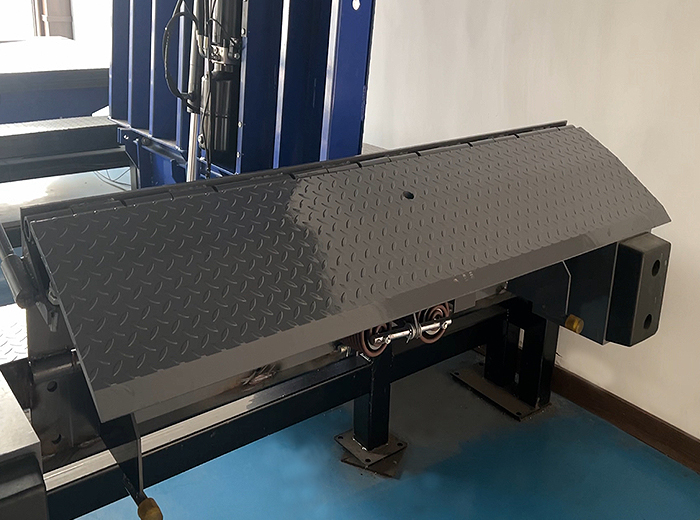
Mechanical Edge of Dock Leveler
Lifting and lowering are achieved via a built-in spring; operation is entirely manual, requiring no power source, resulting in the lowest cost;
Ideal for small unloading areas with low loading/unloading frequency, limited budgets, and minimal height variations among vehicle models.
Electric Edge of Dock Leveler
Motor + hydraulic cylinder one-button lifting system for smoother adjustment and higher load capacity;
Comes standard with a hydraulic lock valve that automatically locks the platform in case of a hydraulic hose rupture to prevent free-fall, ensuring a higher level of safety; commonly used in small- and medium-sized logistics warehouses.
Components
Platform Surface: High-strength, patterned, non-slip steel plate with an I-beam load-bearing frame underneath, designed to withstand forklift traffic;
Lip Plate (Overlap Plate): 500–600 mm extended overlap tongue plate with reinforced galvanized hinge pins,
providing greater load-bearing capacity;
Buffer Bumpers: Rubber bumpers at both ends of the platform to cushion impacts from trucks and protect the dock leveler and equipment;
Safety Support Legs: Support the platform if a truck accidentally drives off, preventing the forklift from tipping over;
Maintenance Support Poles: Prop up the platform during maintenance and cleaning to ensure personnel safety;
Securing Chains: Lock the truck in place during operations to prevent it from shifting.
Key Advantages
Extremely Simple Installation
No need to dig a pit or damage the concrete floor; installation in older homes can be completed in as little as half a day, with virtually zero civil engineering costs.
Lower Cost
Compared to recessed (pit-style) loading docks, the total cost of the unit plus installation is 30%–50% lower.
Compact Footprint
When not in use, the lip panel lies flush against the exterior of the loading dock, leaving the interior passageway unobstructed.
Easy Maintenance
The open-bottom design allows for easy removal of dust and standing water, while exposed hinges and hydraulic cylinders facilitate maintenance.
Technical Specifications
Load Capacity: 6 t / 8 t / 10 t (customizable to 12 t and 15 t)
Platform Width: 1500 mm, 1800 mm, 2000 mm
Adjustment Range: Up + 100 mm / Down – 100 mm
Lip Length: 500–600 mm
Material: Q235 carbon steel, fully painted / galvanized for corrosion resistance
Applicable Scenarios
Renovation of old warehouses and factory buildings (where loading/unloading pits were not originally provided);
Small e-commerce warehouses, retail distribution centers, auto repair shops, and small food processing plants;
Low volume of loading/unloading trips with a highly uniform fleet (primarily urban delivery vans);
Sites where civil engineering work cannot excavate loading/unloading pits due to underground utility lines.
Comparison with Hydraulic Dock Leveler
| Comparison Items | Edge of Dock Leveler | Hydraulic Dock Leveler |
| Installation | Mounted on the outside of the platform; no foundation pit required | Requires excavation and pre-embedding inside the platform; coordination with civil engineering is required |
| Renovation | Low cost, no civil engineering work | High cost, including foundation excavation and waterproofing |
| Adjustment | Height: ±100 mm; limited adaptability to height differences | ±300 mm; compatible with various types of trucks |
| Loading Dock Access | Equipment protrudes; forklifts cannot pass sideways | Flush with the loading dock; free passage across the dock is permitted |
| Frequency of Use | Low- to medium-frequency intermittent loading and unloading | High-frequency, high-volume loading and unloading in logistics parks |
Standard Operating Procedure
Position the truck so it is flush against the bumpers;
For hydraulic models, press the “Up” button; for mechanical models, manually raise the handle until the platform is higher than the truck bed floor;
Lower the lip plate to engage with the truck bed, and use the chain to securely lock the platform to the truck;
A forklift enters and exits to load and unload;
Once the operation is complete, release the chains, raise the platform, allow the truck to drive away, and the equipment automatically resets to fit snugly against the loading dock.