Steel Wind-Resistant Roller Shutters Capable of Withstanding A Category 12 Typhoon?
Blog 2026-07-09
What kind of steel wind-resistant roller shutter can withstand a Category 12 typhoon?
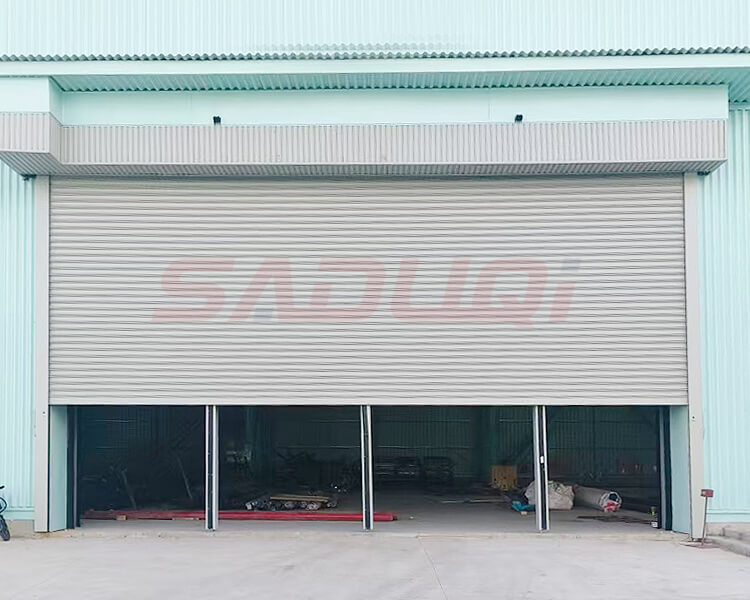
Steel wind-resistant roller shutters are high-strength industrial security doors specifically designed to withstand typhoons, with an opening speed of 2–9 m/min. They are primarily composed of key components such as the door panels, roller shaft, motor and control system. Standard steel wind-resistant roller shutters can withstand typhoons of up to Category 8 (wind speeds of approximately 20.7–24.4 m/s) at most; they are incapable of withstanding Category 12 typhoons (wind speeds of approximately 32.7–36.9 m/s). Therefore, reinforced designs are essential for steel wind-resistant roller shutters.
Based on a comprehensive assessment of factors such as the building’s geographical location, wind pressure values and door dimensions, where wind conditions are severe, it is generally recommended that clients install wind-resistant columns in addition to the wind-resistant roller shutter. Their core function is to provide additional support, reducing the direct impact of wind on the roller shutter and preventing deformation or damage to the door, thereby protecting the interior of the building from wind and rain.
The design of wind-resistant columns for steel wind-resistant roller shutters is based on principles of mechanics. Common wind-resistant columns are made from hot-dip galvanised steel pipes or aluminium alloy profiles, with surfaces treated for corrosion resistance, offering excellent corrosion and weather resistance. Their cross-sections are typically rectangular or circular, whilst some high-end products incorporate ribbed designs to further enhance bending resistance. During installation, the wind-resistant columns are typically fixed to both sides of the door frame or within the door body, working in conjunction with the roller shutter’s guide rail system to form a stable support structure.
When installing wind-resistant posts, ensure that they are securely fastened to the ground and the door frame using expansion bolts or chemical anchors, with a spacing of no more than 1.5 metres. The gap between the door panel and the wind-resistant post should be kept within 5 mm to prevent the door panel from warping due to wind pressure.
To withstand a Category 12 typhoon, in addition to installing wind-resistant posts, the door panels of the steel wind-resistant roller shutter must also meet certain requirements. Standard door panels may be 0.6–0.8 mm thick; however, to withstand a Category 12 typhoon, 1.0–1.2 mm thick hot-dip galvanised steel sheets must be used. These are roll-formed using a door panel forming machine and finished with a baked paint coating to enhance corrosion resistance, ensuring a service life of 8–15 years. The motor is typically an industrial-grade chain drive motor, characterised by low noise, high power and reliable performance. The door is equipped with safety devices such as anti-chain breakage and anti-impact mechanisms to ensure safe and reliable operation. The bottom track utilises specially designed sealing strips to effectively prevent debris from entering, thereby enhancing the door’s airtightness.
Steel wind-resistant roller shutters are generally installed in coastal areas prone to typhoons, such as ports, docks, and the entrances to warehouses and factory buildings in coastal industrial zones. In inland regions with high levels of wind and sand, they are used in warehousing and logistics centres, as well as industrial buildings, to prevent the intrusion of wind and sand.
As a key component of modern industrial doors, steel wind-resistant roller shutters are widely used across a range of industries due to their wind resistance and safety features, as well as their customised designs tailored to specific applications, which meet the individual needs of different customers.