What is a High Speed Doors?
Blog 2026-05-20
What is a high speed door?
High-speed doors, also known as high-speed roller shutters, open and close at speeds of 0.5–2 m/s and can operate over 100 times a day on average. They are industrial doors designed for rapid opening and closing to create a barrier, offering multiple functions including thermal insulation, windproofing, dustproofing, soundproofing, fire resistance and safety. They are highly favoured by many business owners and are widely used in various industrial settings such as food processing, chemical, textile, electronics, retail, cold storage, logistics and warehousing.
Currently, the five most commonly used types of high-speed doors are as follows:
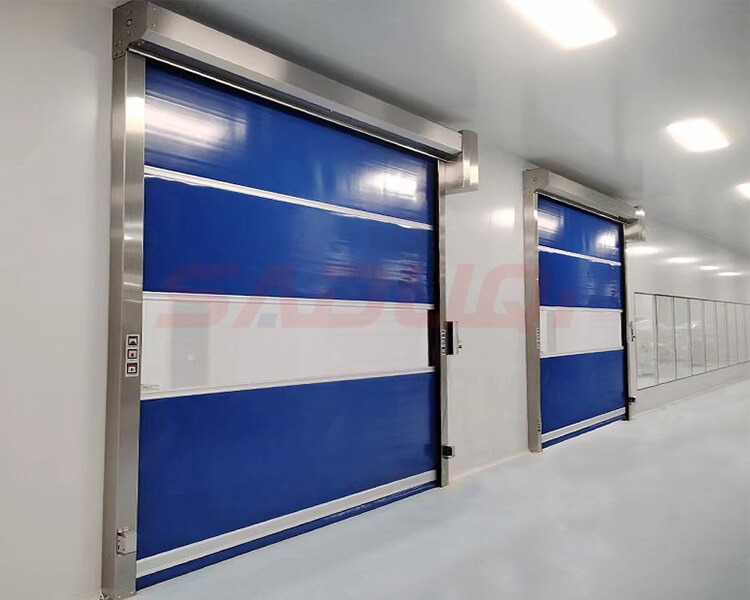
PVC High Speed Doors
Opening speed: Generally 0.6–1.8 m/s
Curtain material: Made from high-strength PVC polyester fibre base fabric, with slat thickness typically ranging from 0.8 mm to 2.0 mm
Performance features: Dust-proof, sound-insulating and highly light-transmitting; used for internal passageways requiring frequent access, such as in the food, electronics, pharmaceutical, and warehousing and logistics sectors.
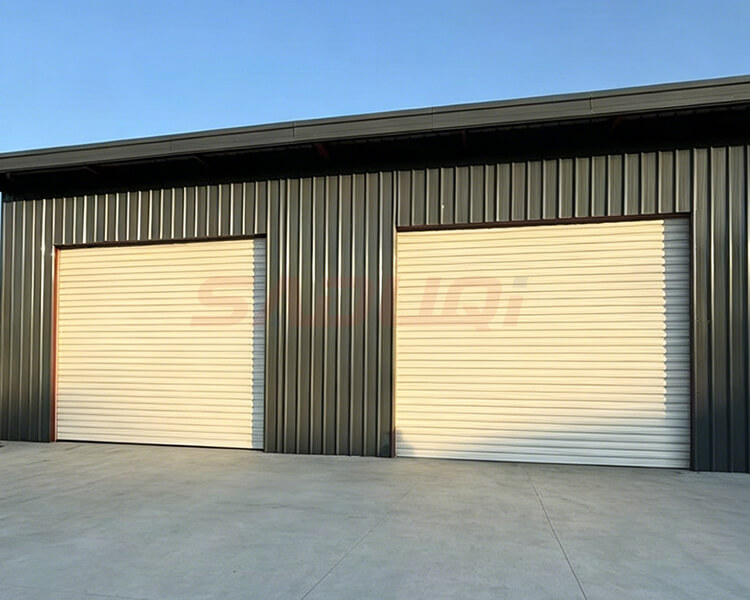
Aluminium Alloy Rigid High Speed Doors
Opening speed: Typically 0.6–2.0 m/s
Curtain Material: The door panels feature a double-layer aluminium alloy thermal break structure, filled with 40 mm thick polyurethane foam insulation
Performance Features: High wind resistance, excellent security, thermal insulation coefficient as low as 0.4 W/m²K; suitable for factory entrances, garages, external access points, and locations requiring high levels of thermal insulation and security
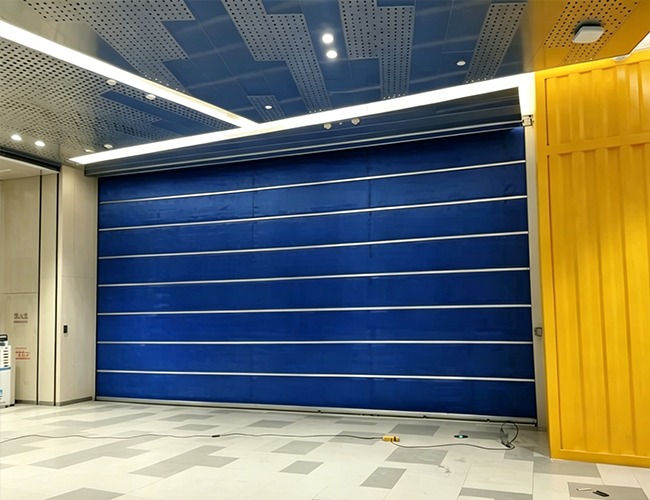
High Speed Sectional Doors
Opening speed: Typically 0.3–1.5 m/s
Curtain material: The curtain is made from high-density PVC polyester fibre backing and opens via a stacking and folding mechanism; it is fitted with wind-resistant bars
Performance features: Excellent wind resistance; suitable for external doors in logistics centres, large warehouses, waste incineration plants and areas prone to typhoons.
Explosion-proof high-speed doors
Opening speed: typically 0.6–2 m/s
Curtain Material: Made from PVC polyester fibre base fabric, with slat thickness typically ranging from 0.8 mm to 2.0 mm,
Performance Features: Both the motor and control system are explosion-proof, making them suitable for locations where flammable gases or combustible dust are present, such as petrochemical plants, paint booths and dust-prone workshops
High speed doors for cold stores
Opening speed: Typically 0.8–2 m/s
Curtain material: High-strength PVC-coated fabric or special low-temperature-resistant PU curtain, fitted with electric heating to prevent freezing (on the track, threshold and uprights)
PerformanceFeatures: Suitable for cold stores and refrigerated logistics corridors, significantly reducing the time taken for air exchange between hot and cold zones.
6 Main Opening Methods for High-Speed Doors
Push-button switch: When the open button is pressed manually, the high-speed door opens immediately. When the close button is pressed manually, the door closes immediately; manual operation of the buttons is required.
Radar sensor: When a person or object enters the sensor zone, the antenna receives the electromagnetic waves reflected back from the object, and the door opens automatically without the need for manual operation.
Ground Loop Sensor: Ground loops are embedded in the floor in front of and behind the high-speed door. When a person or forklift enters this area, the door opens rapidly; once they leave, the door automatically closes.
Infrared Sensor: When a person or vehicle enters the sensor area and causes a change in infrared radiation (such as body heat), the sensor sends a signal to open the high-speed door. Once the person leaves, the door automatically closes after a set time.
Pull-cord switch: A pull-cord is installed near the door, typically within 5 metres of it. The operator pulls the cord to trigger the rapid door to open; manual reset is required before it can be used again.
Photoelectric opening: When a person or vehicle passes through the photoelectric sensor zone, the control circuit receives a signal from the photoelectric sensor and the door opens rapidly.
Four Key Safety Features of High-Speed Doors
- Emergency Stop Button: An emergency stop switch is located in a prominent position on the control panel or door frame, allowing the door’s operation to be manually halted immediately in the event of an emergency.
- Bottom Safety Sensor Airbag: A highly sensitive airbag is built into the bottom rail of the door curtain; when subjected to vertical pressure of a certain weight, the door will immediately reverse direction to prevent pinching.
- Infrared Safety Protection: Installed on both sides or at the bottom of the door frame, this system creates an invisible infrared barrier. Should an obstacle (such as a person, vehicle or goods) be detected whilst the door is descending, the door will immediately stop or automatically reverse and rise.
- Manual Opening in the Event of a Power Cut: In the event of a sudden power cut, the door can be manually raised to a safe height using a special tool, ensuring the passage remains unobstructed.
Although high-speed doors are fast, they must be fitted with appropriate safety devices to ensure they operate quickly, safely and smoothly.