Common Faults and Repair Methods for PVC High Speed Doors
Blog 2026-09-24
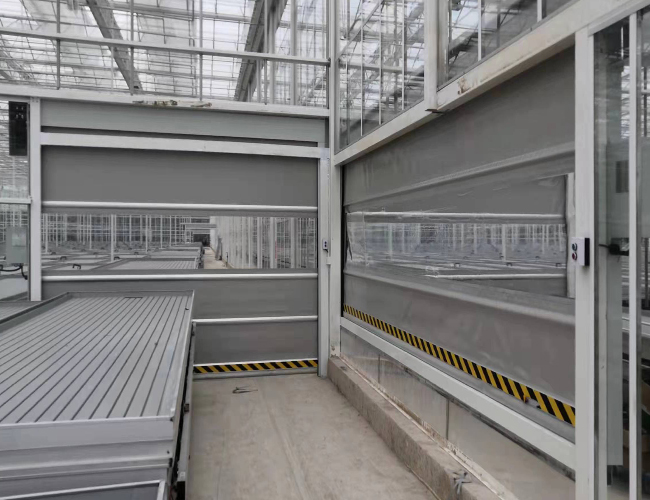
PVC high speed doors are commonly used in factory buildings, cleanrooms and logistics corridors. The complete system comprises a motor, radar, ground-mounted magnetic sensors, airbags, a variable-frequency drive, a flexible door curtain and tracks. Faults can be categorised into four main types: electrical control, motor drive, door mechanism and safety sensors. The following section provides a comprehensive overview of common issues, accompanied by repair solutions that can be implemented directly on site.
The door won’t move; neither the remote control nor the button is responding.
Fault 1: No indicator lights come on when the power is switched on; the unit does not start up
Causes
The main circuit breaker has tripped, the control cabinet power plug has come loose, or there is a phase loss;
The emergency stop button has been pressed, or the emergency stop circuit is open;
The control power supply fuse has blown, or the switching power supply is faulty.
Maintenance
Check that the circuit breakers in the distribution board are closed, and measure the three-phase / 220V input voltage;
Replace the fuse with one of the same specification; if there is no output voltage, replace the switch-mode power supply in the control cabinet.
Turn the red emergency stop button clockwise to reset it, and check the emergency stop terminal blocks;
Fault 2: The control cabinet is powered, but pressing the internal or external buttons or using the remote control produces no response
Causes
Oxidation of button contacts, flat remote control batteries, or a faulty receiver;
The door limit switch is jammed, causing the variable-frequency drive to enter protection lockout mode;
A break in the infrared safety beam or obstruction triggering the shutdown protection.
Repairs
Replace the remote control batteries; test by short-circuiting the button terminals; replace any faulty buttons;
Clean the lenses of the photoelectric transmitter and receiver, align the light path, and repair any broken wires;
Switch off the power and restart the variable-frequency drive; manually release the door curtain to check whether the upper and lower limit switches are jammed.
The door moves, but it is not operating correctly when raising and lowering
Fault 1: The door automatically bounces back and rises whilst lowering
Common Causes
Air leakage from the bottom airbag, detached airbag tubing, faulty pressure switch;
Foreign objects obstructing the bottom photoelectric sensor, debris in the track causing the curtain to jam;
Excessively high sensitivity of the soft-start parameters on the variable-frequency drive.
Maintenance
Check the airbag for damage, reconnect the air hoses, and press the airbag to test the switch signal;
Clear dust and packaging waste from the guide rails, and straighten any warped guide rails;
Access the inverter parameters and reduce the sensitivity of the anti-collision sensor.
Fault 2: Severe jerking, vibration and abnormal noise during ascent/descent
Causes
The counterweight at the bottom of the pvc high speed door curtain has come loose, or the PVC curtain fabric is creased and caught in the track;
The roller bearing is low on oil, the chain is too loose or too tight, or the chain lacks lubrication;
The guide rail is warped, or the brush strip has come loose and is rubbing against the door panel.
Repairs
Straighten the door curtain, re-secure the counterweight, and trim any distorted or damaged sections of the curtain;
Lubricate the bearings and chains with high-temperature grease, and adjust the chain tension;
Straighten any bent guide rails and refit the track sealing brushes.
Fault 3: The door does not reach the upper or lower limit positions; it does not stop accurately
Causes
Displacement of the magnetic limit magnets; failure of the reed limit switches;
Loss of travel parameters in the variable-frequency drive; data reset following a power cut;
Slippage of the roller shaft; insufficient friction between the door curtain and the roller shaft, causing it to spin freely.
Repair
Readjust the position of the upper and lower limit magnets; replace faulty limit switches;
Re-teach the door travel limits and save the variable-frequency drive parameters;
Tighten the roller clamping strip to increase the clamping force on the door curtain and prevent slippage.
Fault 4: The gate automatically rises and falls repeatedly after reaching the bottom position
Cause
Poor contact in the lower limit switch signal; continuous false triggering of the ground loop or radar.
Repair
Secure the limit switch wiring; reduce the radar detection range; adjust the sensitivity of the ground loop coil.
Failure of automatic door opening via radar and geomagnetic sensors
Fault 1: Radar fails to detect; the gate does not operate when people or vehicles pass through
Causes
The radar power supply is disconnected; the radar angle is misaligned; the detection range setting is too low;
The radar sensor is dirty; the steel structure of the factory building is causing signal interference.
Repair
Re-secure the radar and adjust the downward beam angle;
Increase the radar detection range setting on the control cabinet and clean dust from the sensor;
If obstructed by a metal post, relocate the installation.
Fault 2: The ground-loop sensor shows no response; the gate does not open when a lorry passes over it
Causes
Break in the ground-loop coil; power supply fault to the ground-loop detector;
Water ingress in the coil causing a short circuit; detector sensitivity set to the lowest level.
Repair
Excavate the ground to inspect for breaks in the wire; re-solder the coil and waterproof it;
Increase the detector sensitivity setting; switch off the power and restart the ground-loop controller;
Ensure the coil is properly waterproofed in areas prone to water accumulation.
Motor and inverter faults
Fault 1: The control cabinet displays an overload or overcurrent alarm
Causes
Excessive resistance due to the door being jammed;
Motor bearings seized or motor windings short-circuited;
Damaged inverter output module, resulting in unstable voltage.
Repair
Manually pull the door to locate and clear the point of jamming;
Measure the resistance of the motor’s three phases; if the resistance is unbalanced, replace the motor;
Disconnect the power supply and allow the inverter to cool; if the fault persists, replace the drive board.
Fault 2: Motor hums but the door does not move
Causes
Phase loss, burnt-out brake coil, seized brake disc.
Repair
Measure the three-phase voltage; replace the brake rectifier; manually release the brake disc.
Fault 3: Door closes too quickly / too slowly
Repair
Access the inverter parameters and adjust the acceleration and deceleration speeds, as well as the buffering and deceleration parameters.
Faults with the door’s PVC curtain, tracks and sealing components
Fault 1: Tear in the door curtain, derailment, or misalignment
Causes
Impact with the door curtain by a vehicle; forced pulling due to incorrect adjustment of the upper and lower limit stops;
Excessive track spacing; wind deflectors have come loose, causing misalignment.
Repair
Repair small tears using specialised PVC adhesive; replace the curtain fabric in the event of large-scale tearing;
Adjust the parallelism of the tracks on both sides and fit wind-resistant, wear-resistant strips;
Recalibrate the limit switches to prevent derailment caused by excessive pulling.
Fault 2: Damaged bottom seal strip; air and dust leakage
Repair
Replace the bottom PVC air-cushion seal strip and secure the clips to prevent air leakage and rebound.
Fault 3: Worn track brush strips; large amounts of dust and insects entering the workshop
Replace the entire track seal brush strip to reduce energy consumption and minimise friction-induced noise from the door.
Quick troubleshooting for minor faults with remote controls, photoelectric sensors and safety components
Reduced remote control range: Replace the receiver antenna; replace the remote control batteries;
Frequent error messages from the infrared photoelectric sensor: Clean the lens; align the transmitter and receiver heads; replace any broken cables;
Airbag failure: Replace the damaged airbag; repair the air tube connectors;