Common Faults and Repair Methods for Hydraulic Dock Leveler
Blog 2026-10-17
Hydraulic dock leveler, as commonly used equipment in logistics loading and unloading operations, can sometimes experience faults such as lack of lifting power, spontaneous descent, oil leaks, tilting of the platform, control failure and safety lock jamming.
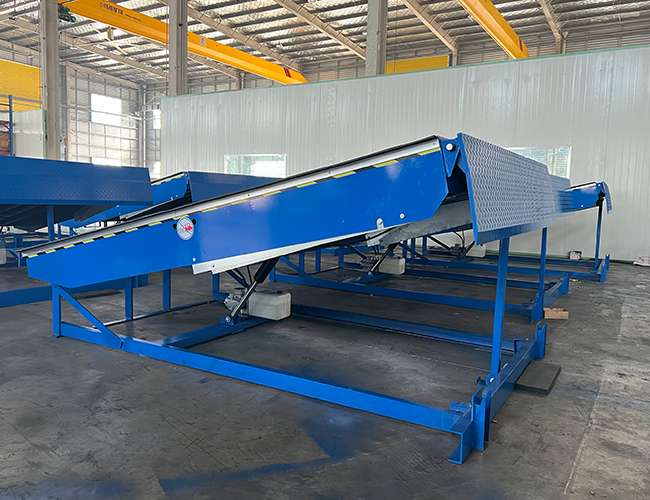
How should we deal with these faults when they occur?
The Platform Does Not Rise
No Movement Whatsoever When Powered On
Symptom: Pressing the ‘Up’ button produces no response; the dock leveler motor does not turn
Causes: Phase loss / power cut, emergency stop button pressed, control fuse blown, ‘Up’ button faulty, contactor fault
Repair
Check the three-phase power supply to ensure the voltage is normal, then reset the emergency stop
Test the fuse, push-button contacts and AC contactor; replace any faulty components immediately
Check the motor terminal blocks for loose connections or burn marks
Platform Descent Anomalies
No Decrease
Symptom: Lifts normally, but does not respond when the descent button is pressed
Cause: The descent solenoid valve coil is burnt out or the valve spool is seized; the descent throttle valve is closed; the dock leveler’s safety outrigger has not been retracted (on models with a safety lock)
Repair
Apply power to test the solenoid valve coil; if there is no power, check the wiring; if the coil is burnt out, replace it immediately
Disassemble the solenoid valve and clean the valve spool of metal shavings and debris;
Check that the safety lock is fully unlocked; for models with a mechanical safety hook, the hook must be disengaged before lowering can take place.
Automatic Descent (maintains pressure differential; drops slowly after coming to a halt)
Causes: Wear to the check valve seal, internal leakage in the hydraulic cylinder, poor sealing of the relief valve, leakage from hydraulic pipe fittings.
Repair
First, check the external hydraulic pipes and fittings for oil leaks;tighten or replace the seals.
Clean the check valve; replace it if worn.
Internal leakage due to ageing of the hydraulic cylinder piston seals → Dismantle the cylinder and replace the oil seals.
Oil Leak Faults
Oil leaks from pipe fittings: Aged O-rings, loose threads → Tighten the fittings and replace the seals
External oil leakage from the cylinder piston rod: Worn dust seal / main oil seal → Replace the cylinder oil seal; check the piston rod for scuffs or scratches; if the piston rod has pitting, repair it or replace the cylinder.
Oil seepage from the hydraulic valve block or pump housing: Aged gaskets; cracks in valve components → Replace the gaskets; if the housing is cracked, replace the valve or pump directly.
Platform Tilt
Symptoms: One side is higher than the other; uneven load distribution.
Causes: Internal leakage in one of the hydraulic cylinders; inconsistent flow rates through the left and right throttle valves; wear on the hinge pins; deformation of the hydraulic dock leveler frame.
Repair
Adjust the throttle valves on both hydraulic cylinders to synchronise the lifting and lowering speeds
Inspect the pins and bushings; apply grease if worn, or replace the bushings if wear is severe.
A deformed frame must be straightened; do not continue to use the platform under these conditions, as it is prone to bending.
Electrical fault
Button malfunction: Loose wiring, water ingress causing oxidation → Replace with a waterproof button.
Limit switch failure (continues rising to the top without stopping): Upper limit switch displaced or damaged → Adjust the limit switch position or replace the limit switch.
Frequent tripping: Motor overload, short circuit in the wiring, hydraulic lock-up causing pressure build-up → Check for mechanical jamming and inspect the insulation of the wiring.
Safety Lock Fault
Safety lock fails to engage: spring fatigue, wear on the locking hook, jammed pin → Replace the spring, polish the locking hook, remove rust and lubricate.
Locking hook fails to release: Faulty hydraulic release solenoid valve, foreign object jammed in the dock leveller → Remove debris, repair the solenoid valve.