What is a Mechanical Dock Leveler?
Blog 2026-09-04
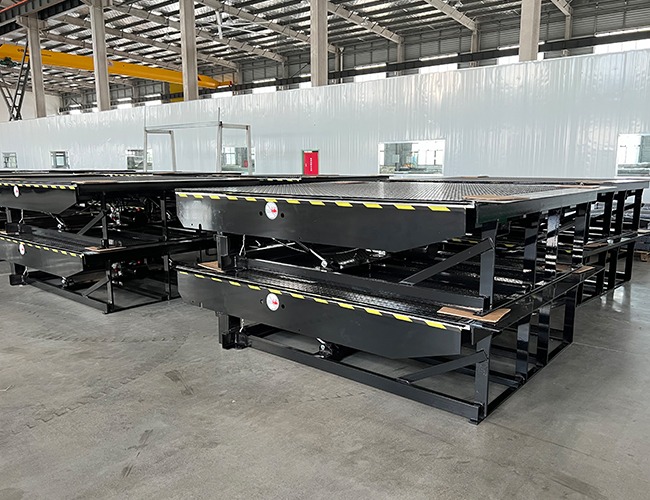
Mechanical Dock Leveler (Mechanical Dock Leveler / Mechanical Loading Platform) is a height-adjustment device installed at loading bays in factory buildings and warehouse docks that operates without hydraulic power. It utilises a spring-loaded mechanical structure to raise and lower the platform, thereby eliminating the height difference and gaps between the lorry’s cargo compartment and the warehouse dock.
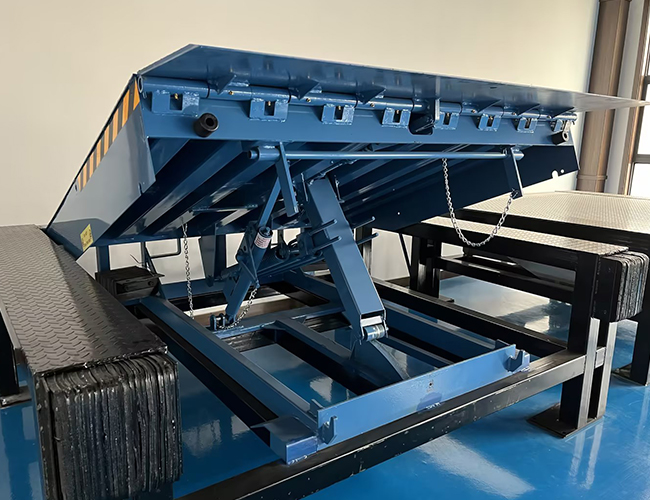
This allows forklifts and pallet trucks to drive directly into the cargo compartment to load and unload goods, making it an essential piece of loading and unloading equipment for logistics and warehousing facilities, as well as factory workshops.
Unlike hydraulic dock levelers, they are driven entirely by mechanical springs throughout the entire process, requiring no electric motors, oil pumps or hydraulic hoses; lifting and lowering are achieved by manually raising and lowering the ramp.
Structural Components of a Mechanical Dock Leveler
Main Load-bearing Platform
Material: GB-standard ribbed anti-slip steel plate / grating steel plate; thickened for wear resistance, with anti-slip raised ridges to prevent forklift slippage;
Structure: One-piece bent construction with longitudinal and transverse reinforcing ribs on the underside for load-bearing capacity and resistance to deformation;
Function: The primary load-bearing surface for the passage of forklifts, pallets and goods.
Front Overhanging Lip (Folding Lip)
Available in standard straight lip, anti-slip serrated lip and extended lip designed specifically for containers;
Hinged to the platform as a single unit; mechanical springs ensure synchronised lifting and lowering, allowing it to fit snugly against the floor of the lorry’s load compartment;
Rounded chamfered edges prevent scratching of the lorry’s load compartment floor or the underside of pallets.
Mechanical Spring Lifting Drive System
Main balancing springs: multiple sets of high-strength alloy steel tension springs store elastic energy to enable automatic lifting of the platform;
Manual pull cord / handle: pulling this manually unlocks the springs, causing the platform to spring up; upon release, a light press causes the platform to return to its lowered position, resting flush against the lorry body;
Spring-loaded limit latch: Locks the platform in place when stationary to prevent accidental spring-up, providing a secure locking mechanism.
Pre-embedded Base Frame
A monolithic channel steel welded base, pre-embedded within the loading bay pit, secures the entire unit and distributes the impact force from forklift traffic; fitted with limit stops to restrict the maximum lifting and lowering travel of the platform.
Safety Protection
Safety guardrails on both sides: prevent forklifts from skidding sideways and personnel from stepping into the gap and falling;
Anti-slip grooves and warning yellow-and-black painted edge markings;
Mechanical safety struts: prop up the platform during inspection and maintenance to prevent sudden drops that could cause injury;
Rubber bumpers: provide cushioning at both ends of the equipment; cushion the impact when lorries reverse into the platform, protecting both the platform and the vehicle body.
How a Mechanical Dock Leveler Works
Standby locked position
The platform is fully lowered and level with the loading bay; the springs are compressed; the mechanical latch secures the platform, preventing it from springing up unaided; pedestrians and trolleys may pass over it as normal;
Lifting operation
The operator pulls the manual cable on the side to unlock the spring latch; the counterbalance springs release their tension, causing the entire platform to spring upwards, whilst the front lip plate flips up simultaneously;
Docking with a lorry
A forklift gently presses down on the front edge of the platform; the platform slowly lowers under spring tension, with the front lip resting on the floor of the lorry’s load compartment to form a stable ramp; the springs continue to provide downward preload, ensuring the lip remains firmly pressed against the load compartment and does not disengage even with slight vehicle movement;
Loading and unloading operations
The forklift travels back and forth repeatedly between the loading bay and the lorry, with the platform adapting automatically to the lorry’s slight height fluctuations;
Reset and locking
After the lorry has driven away, the platform is raised again by pulling the cable; once released, the mechanical dock leveler drops back into the pit, the mechanical lock is engaged, and it returns to a level position with the loading bay.
Mechanical Dock Leveler Technical Specifications
| Projects | Parameters |
| Rated load capacity | 6 t/8 t/10 t/12 t |
| Worktop dimensions | width 1800/2000/2200 mm, length 2500/3000/3500 mm (choose a wider worktop the wider the platform) |
| Height adjustment range | 300 mm down to 400 mm up |
| Steel plate thickness | Main worktop plate 8–12 mm, reinforcing channel steel No. 10/No. 12 |
| Spring material | 65Mn high-strength manganese steel springs, resistant to fatigue from repeated lifting and lowering |
| Surface treatment | sandblasting for rust removal + zinc-rich epoxy primer + yellow and black high-visibility topcoat; rust-proof and resistant to industrial oil stains |
| Operation | Manual cable hoisting on one side; can be operated by a single person |
Mechanical Dock Leveler Key Strengths
Operates Normally During Power Cuts
Can be used during power cuts, factory power restrictions or at level crossings without a power supply; loading and unloading are not interrupted by power cuts, making it suitable for standby loading bays and remote factory sites.
Extremely Low Failure Rate
Contains no vulnerable components such as electrical circuits, hydraulic oil, oil pumps or solenoid valves; the only core wear parts are springs and hinges, resulting in minimal maintenance requirements even with long-term use.
Explosion-proof Safety
There is no risk of sparks from motor start-up, making it an excellent choice for flour mills, chemical raw material warehouses, paint workshops and dust-explosion-proof facilities.
Waterproof and Moisture-resistant
With no risk of short circuits caused by water ingress into electrical components, it offers a longer service life in cold stores, open-air loading bays and damp processing plants.
Mechanical Dock Leveler Routine Maintenance
Daily Inspection
Pull the cable to test the lifting mechanism, ensuring the spring returns smoothly and the latch locks securely;
Check the lip plate hinges for any sticking or deformation;
Clear any debris or metal shavings from the worktop to prevent scratching the non-slip surface.
Weekly Maintenance
Apply high-temperature-resistant grease to all articulated pivots and spring connection points;
Check the cables for wear or broken wires, and replace them promptly.
Quarterly / Annual Maintenance
Conduct a comprehensive inspection of the springs’ elasticity; if the worktop fails to return fully to its resting position or lacks lifting power, this indicates spring fatigue, and the entire set should be replaced;
Check the base welds for cracks and reinforce them with additional welding;
Reapply anti-rust paint to worn areas to prevent the steel plate from corroding and thinning;
Use mechanical safety struts to prop up the worktop and clear any silt and standing water from the base pit.
Requirements for Installation Excavation Pits
The excavation for the loading bay shall be of a length, width and depth matching the platform dimensions, with a load-bearing concrete sub-base at the bottom to prevent subsidence caused by long-term vehicle traffic;
Embedded anchors shall be installed around the perimeter of the excavation to secure the channel steel base of the platform;
Space shall be provided on the sides of the excavation for operating the handrails, with a minimum of 300 mm of operating space reserved on each side;
Drainage holes shall be provided at the bottom of the excavation pit to prevent water accumulation from corroding the springs and base;
Truck stop devices shall be installed on both sides of the loading bay to prevent lorries from colliding with the platform lip.